CIRCA
2013-2016–
RESIDENTIAL
–
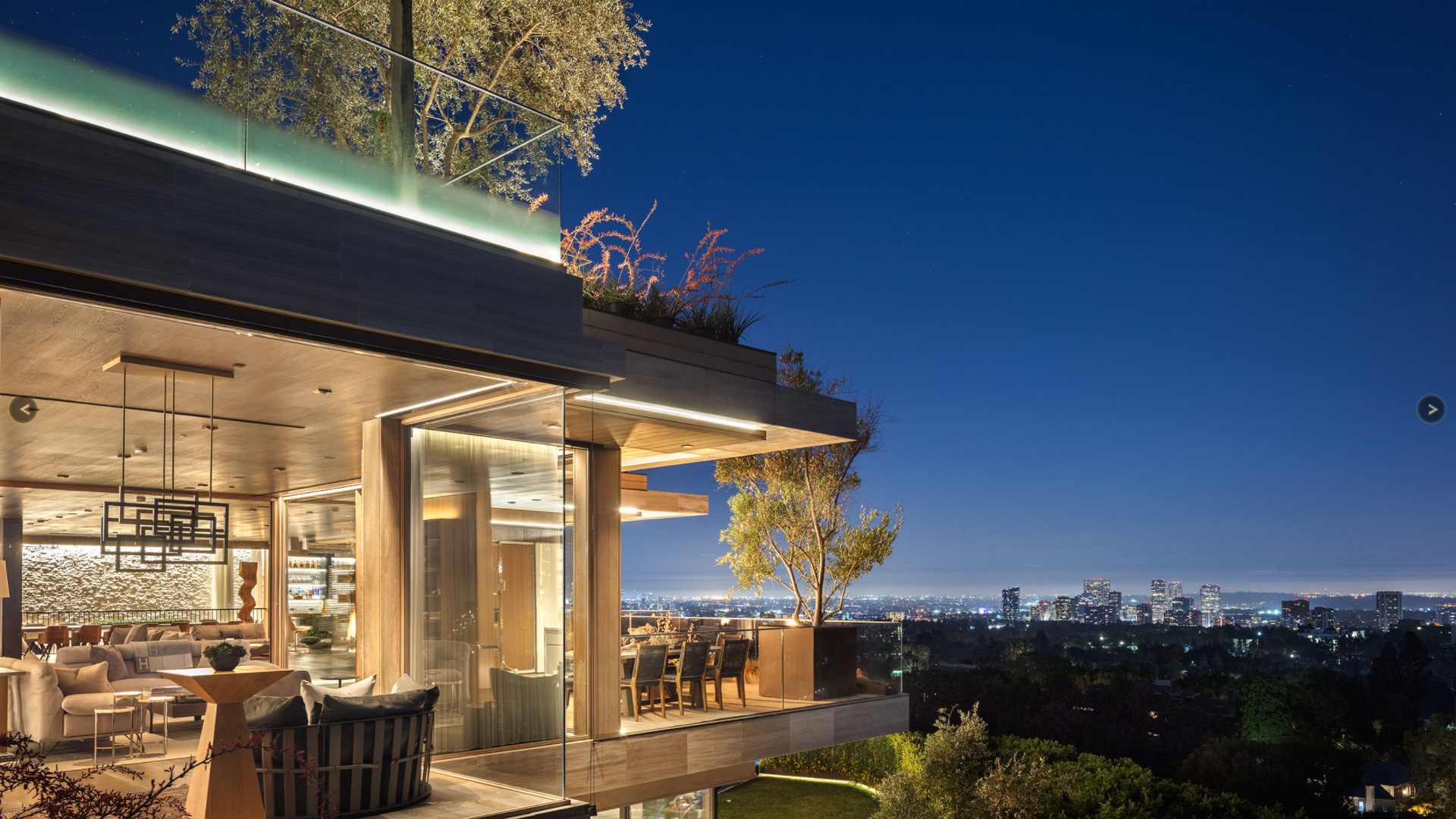
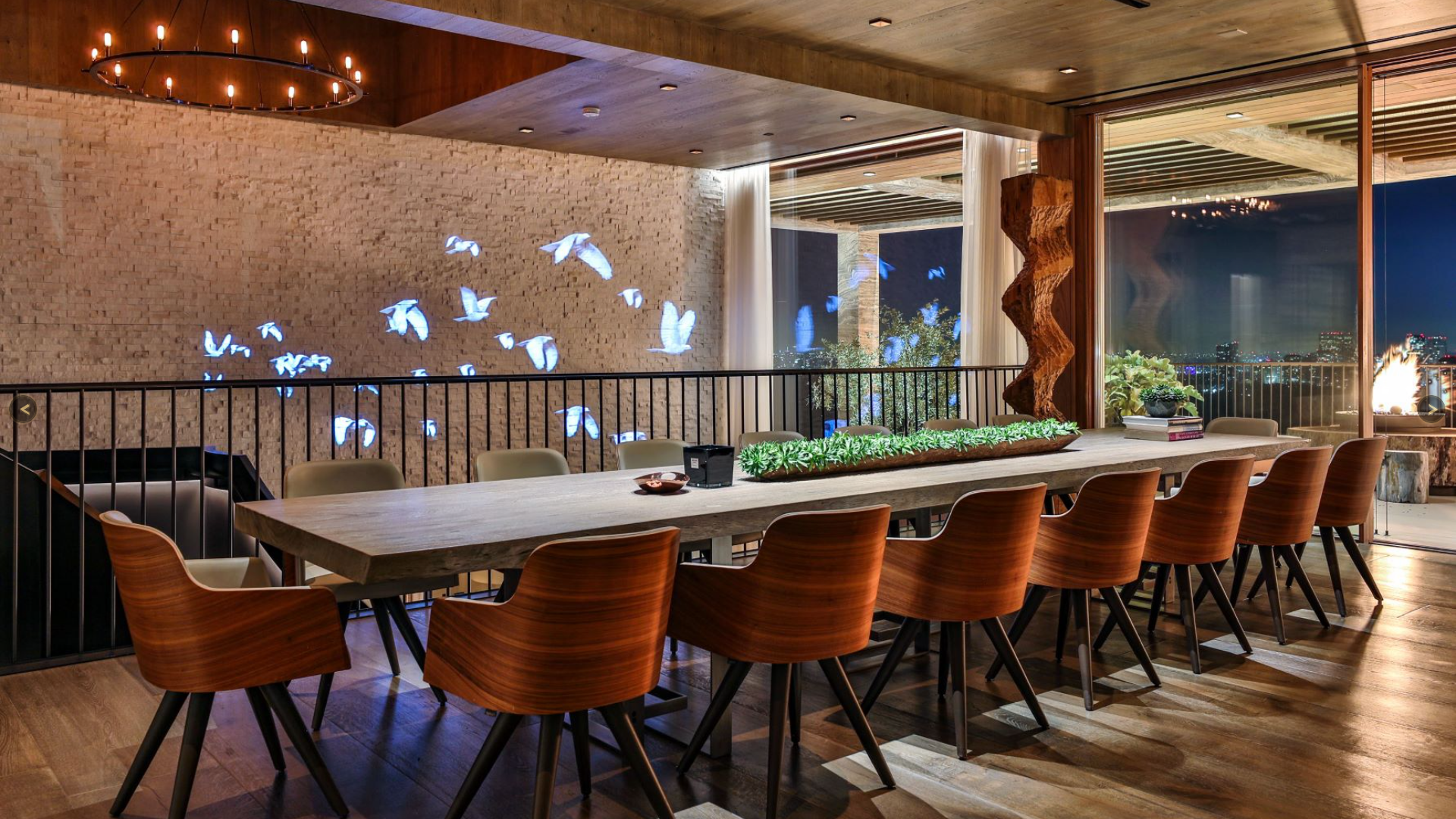
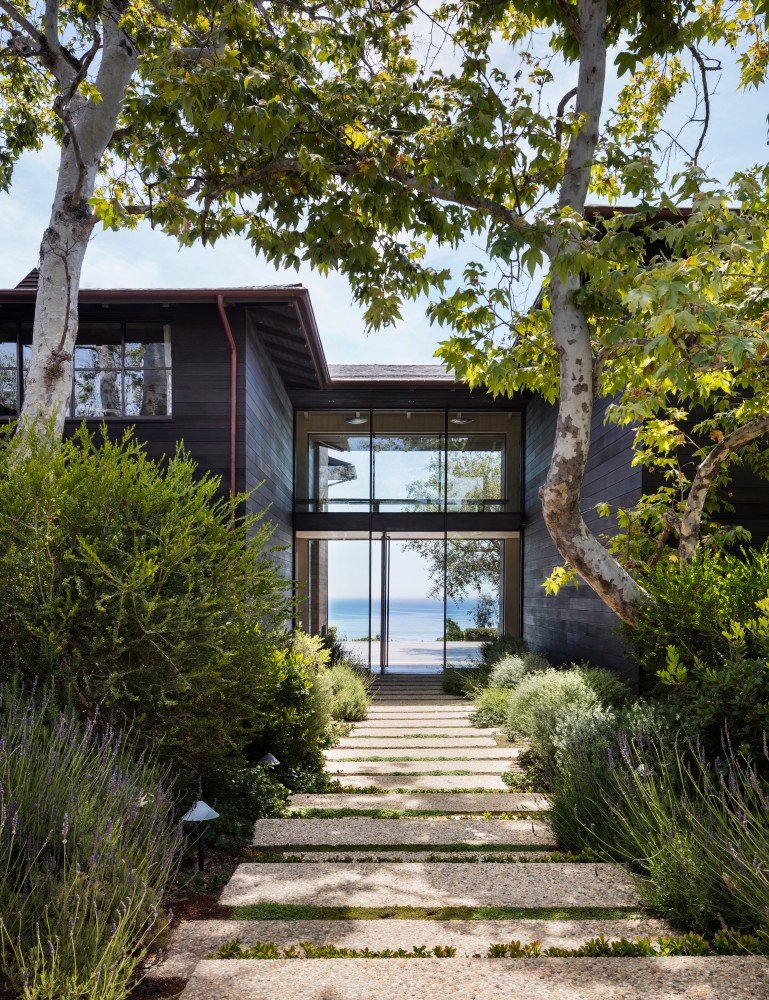
Architectural Design work produced while working with owner and renowned master builder Ardie Tavangarian of architectural design build firm Arya Group Inc. (2013-2016).
Courtesy of Architectural Digest https://www.youtube.com/watch?v=8t5Z-pVjYAE&t Join real estate agents Branden and Rayni Williams of Williams and Williams fo...
The following animation is a design proposal for a high end boutique hotel in Downtown Los Angeles. Developed by Arya Group Inc. Arya Group is a high end design build firm located in Los Angeles Ca. The proposal involved an extensive rooftop remodel which included a new elevator amazing pool, intricate lattice roof / shade canopy and a new bar.
CIRCA
2011
–
-INSTALLATIONS-
-RESIDENTIAL TOWER-
–
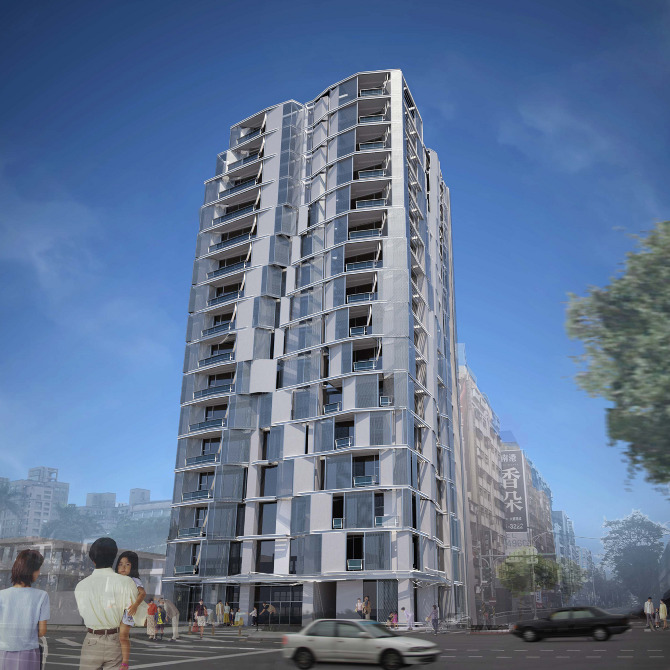
Architectural Design Work produced while working at the experimental architectural design firm Oyler Wu Collaborative (2011).
CIRCA
2008-2013
–
SCI_ARC
–
Southern California Institute of Architecture selected works (2008-2013)
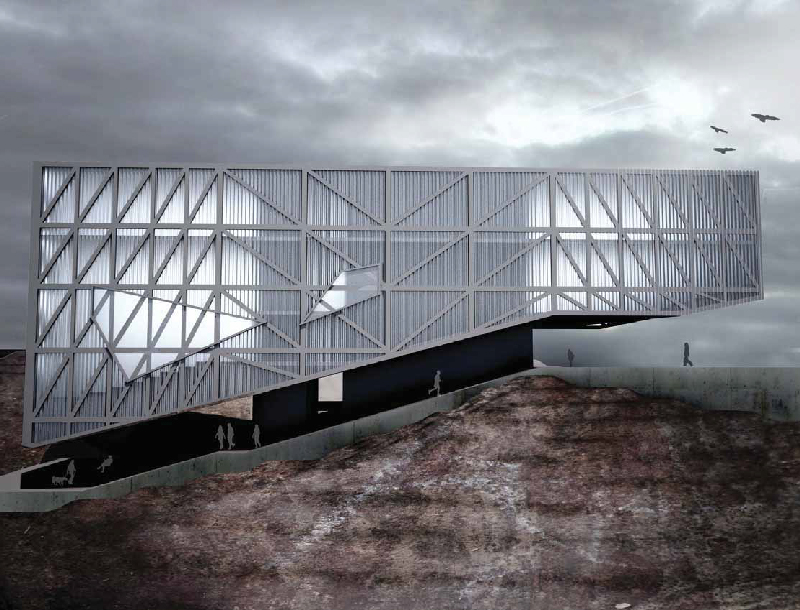
Viborg, Denmark, Musician Residence, Performance Space, Aarhus School of Architecture, Student Project
Video documenting the development and fabrication of the 2011 SCI-Arc Graduation Pavilion by Oyler Wu Collaborative along with students at SCI-Arc.
www.oylerwu.com
www.sciarc.edu
www.themtoo.com
Video produced by Them Too Productions.
Project Credits
Principal Architects: Dwayne Oyler, Jenny Wu
Project Team, Oyler Wu Collaborative: Nick Aho, Chris Eskew, Matt Evans, Andy Hammer, Michael Ho, Richard Lucero, Sanjay Sukie, Yaohua Wang
Project Team, SCI-Arc: Jacob Aboudou, Casey Benito, Paul Cambon, Julian Daly, Hung Diep, Jesus Guerrero, Clifford Ho, Duygun Inal, Mina Jun, DaeHyun David Kim, Noorey Kim, Jacques Lesec, Zachery Main, Tyler McMartin, Richard Nam, Kevin Nguyen, Manuel Oh, Carlos Rodriquez, Bryant Suh, Kyle von Hasseln, Liz von Hasseln, Jie Yang
Engineering: Nous Engineering
Principal Engineer: Matt Melnyk
Project Description:
Every year in early September, as graduate students at the Southern California Institute of Architecture (SCI-Arc) in Los Angeles put the finishing touches on their thesis projects, a Sci-Arc faculty member and students prepare a temporary pavilion for the annual graduation ceremony. This year, faculty members Dwayne Oyler and Jenny Wu of Oyler Wu Collaborative, along with their students, designed a pavilion entitled Netscape for the event that stretches across the northern end of the SCI-Arc parking lot, providing seating for 900. Consisting of 45,000 linear feet of knitted rope, 6000 linear feet of tube steel, and 3000 square feet of fabric shade louvers, the pavilion creates a sail-like canopy of rope and fabric that floats above the audience. With its fabric louvers tilted toward the western sky, the canopy is designed to provide shade for the specific date and time.
Netscape utilizes a double layer of netting in varying configurations to create a three-dimensional field of billowing shade louvers. Based on a conventional knitting technique, like that used in the making of a sweater, the pavilion exploits the malleability of this technique as it stretches to conform to the three-dimensional shape of the structure. Unlike a conventional net, the knitting technique is not fixed at its intersections, allowing the shape of the nets (and their grids) to contort both at the upper and the lower surface. With the nets contorting differently, the shade louvers that are stretched between them become a dynamic field of fabric, twisting and bending in order to span across the space in between.
Design of the project involved an elaborate back and forth between digital and analog systems of investigation. With engineering done by Nous Engineering, analysis of the tension in the nets provided constant feedback that informed the shape and three-dimensionality of the structure, as well as some basic form-finding for the nets. As the project progressed, however, large three-dimensional models provided a means of studying the behavior of the grids and their resulting geometries.
With the shade louvers designed to block the setting sun in the west, the view from inside the pavilion offers a dramatically different experience. The three-dimensionality of the double-layered netting reaches depths of about 10’, and becomes open and porous when facing eastward into the complex three-dimensional field of fabric and rope.
www.oylerwu.com
www.facebook.com/oylerwu
www.sciarc.edu
Project Description
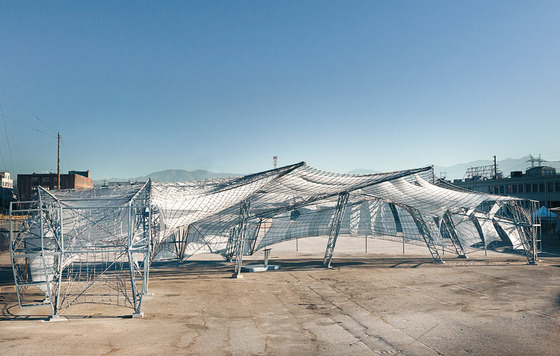
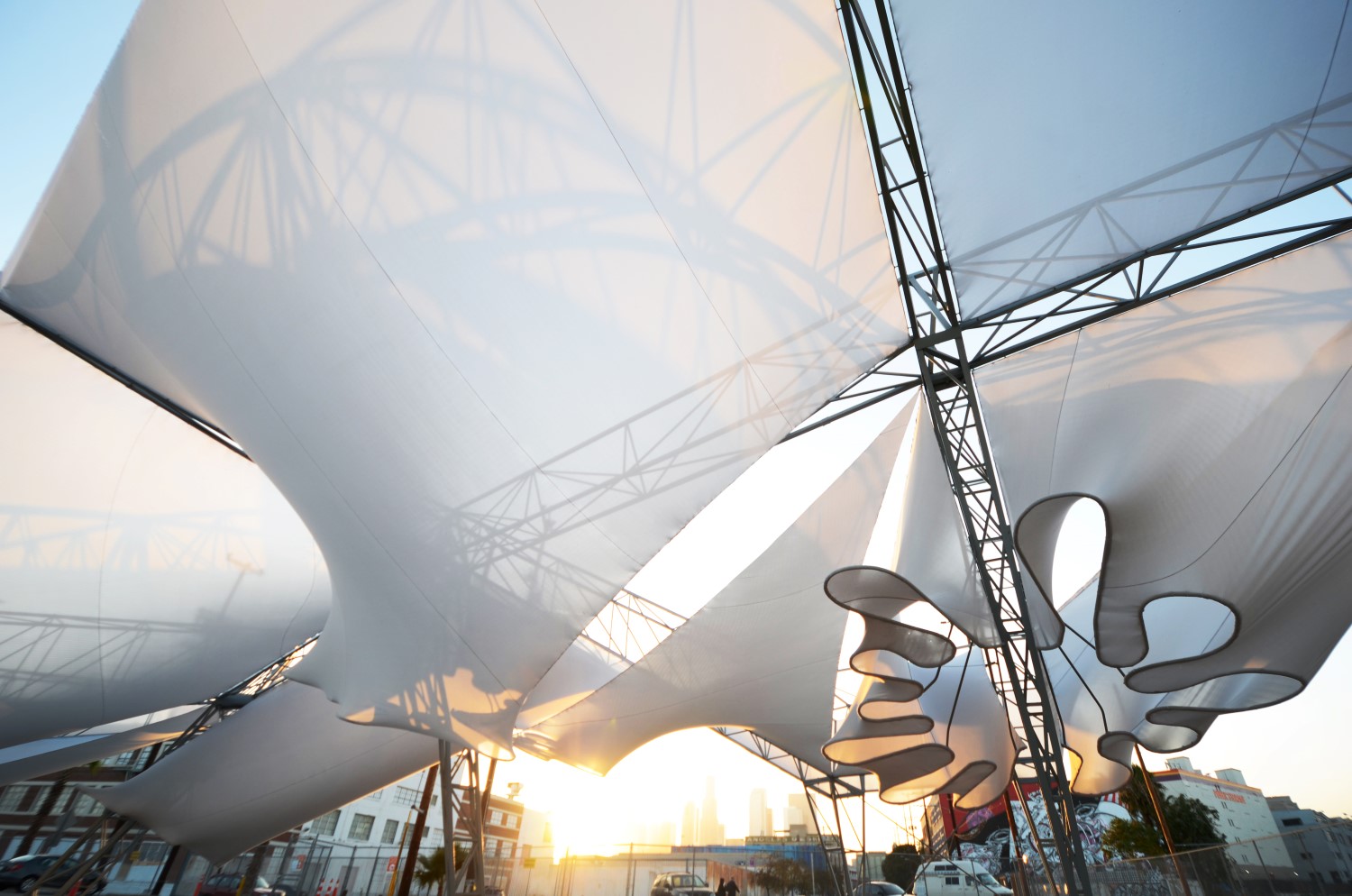
Designed and built by the office of Oyler Wu Collaborative along with students of the Southern California Institute of Architecture, Stormcloud is the third project in a series of installations designed for SCI-ARC. The previous two installations, Netscape and Centerstage were designed for the school's graduation ceremonies in 2011 and 2012 respectively. With SCI-Arc celebrating its 40th anniversary, the school commissioned the new pavilion for the after-party of its April 2013 gala. Tasked with the challenge of revamping the existing Netscape pavilion, Oyler Wu Collaborative saw the project as an opportunity to take a completely different approach to the problem. By removing the ten miles of knitted ropes that once hung between the soaring steel trusses, the project was transformed both volumetrically and materially. Using a minimal amount of new steel elements and cable supports, a spandex fabric was stretched between the elements, giving the pavilion a new life and an unexpected volumetric presence.
Geometrically, the project involves a series of funnel-like forms that extend from the rectilinear canopy structure above to a series of rings that are hung from the columns at around eye level. In the original conception of the project, the rings were simple geometric loops, but this relatively straight-forward geometric approach presented a difficult problem in terms of fabric patterning. At the heart of the problem was the dramatic difference in the circumference between the upper portion of the canopy and the lower rings. As a way of dealing with the problem, the eye-level rings were converted to more eccentric shapes made of a bent steel tubing. With the circumference of the eccentric shapes carefully sized to match the circumference of the upper canopy, the strategy effectively eliminated the need for patterning of fabric, while producing an undulating, curtain-like effect on the surface of the funnels.
One of the more striking features of the scheme is the oscillation between the reading of lines (in the structural system), surface (revealed at the base of the funnels), and volume (most present in the overall external view of the pavilion) . What begins as a reading of volume ultimately reveals a system of deep spatial cavities through which an intricate structural system moves in and out of view. These qualities are accentuated further by both natural and artificial lighting effects. The thinness and the lightweight color of the fabric produces a changing set of effects as natural lighting conditions change throughout the day. The fabric is at times translucent with a ghostly network of structure revealed beyond , and at other times opaque with dramatically warped shadows cast across the undulating surfaces. The lighting for the after-party was an opportunity to take that one step further, using changing color gradients to highlight the eccentric forms at the bottom funnels.
Video Production:
Luisa Martinez, Mike Piscitello, Patrice Chang, Adam Fujioka, Dwayne Oyler, Jenny Wu
Project Design and Fabrication Team (Oyler Wu Collaborative):
Dwayne Oyler, Jenny Wu, Mike Piscitello, Huy Le, Sanjay Sukie
Project Fabrication and Documentation Team (SCI-Arc): Sandra Reyes, Justin Tan, Jennie Sun, Dan Lu, Daniel Lee, Helena Yun, Noni Pettinger, Jonathan Bruen, Jocelyn Basseporte, Justin Kim, Vaishail Shah, Adam Fujioka, Arnold Kim, Melody Javahevian, Jacky Huang, Patrice Chang, Cody Miner, Shawn Rassekh, Bailey Shugart, Ryan Roark, Chuck Diep, Jennifer Diep, Cathy Qu, Elliott Freeman, Matt Pugh, Deysi Blanco, Stephen Rafferty
Structural Engineering: Nous Engineering, Matt Melnyk
Photography: Scott Mayoral, Art Gray, Clifford Ho, Dwayne Oyler